
Searching for the Best Physiotherapist in NW Calgary? Here's What to Look For

A Practical guide to choosing the right physiotherapist for your needs.
By Chris Coupal, Registered Physiotherapist · MScPT
Owner of Northstar Physiotherapy

Northstar Physiotherapy is located in Cambrian Heights, NW Calgary, providing private, one-on-one physiotherapy for patients from the surrounding communities.
Searching for the “best physiotherapist near me” or “best physio in Calgary” can bring up dozens of clinics, Google reviews and recommendations. But how do you know which physiotherapist is right for you?

Whether you’re recovering from a sports injury, dealing with persistent neck or back pain, or simply hoping to move more comfortably, choosing a physiotherapist can make a meaningful difference in your experience of rehabilitation.
The right physiotherapist for you is someone who you get along with, understands your goals, has the appropriate clinical skills, communicates clearly and develops a treatment plan that fits your needs.
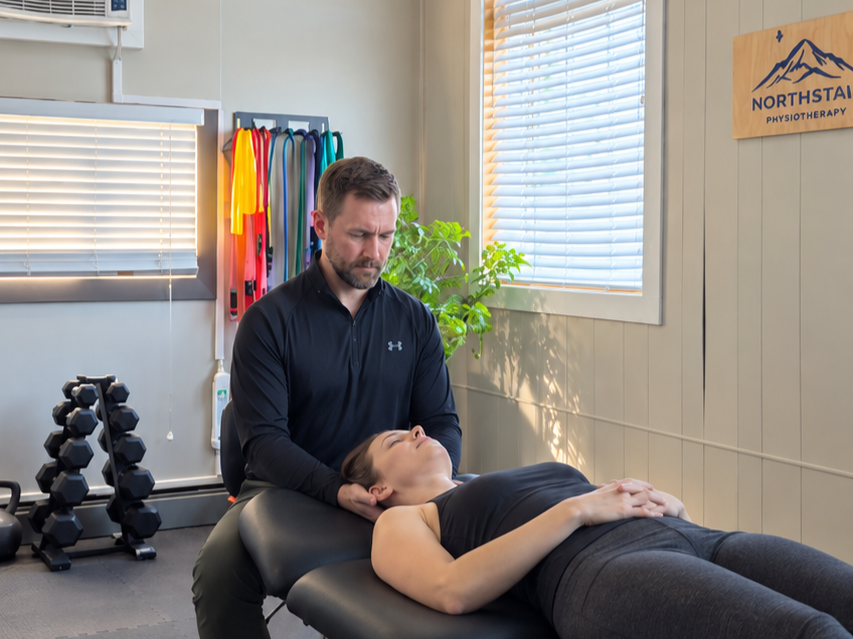
Is There Really a “Best” Physiotherapist?
Definitely not! Calgary has many highly educated, skilled, and dedicated physiotherapists, and there's no single physiotherapist who's the best choice for everyone.
The truth is, the “best” physiotherapist is the one who's the right fit for you. That depends on several things, including the condition you're experiencing, your personal goals, the physiotherapist's experience, and their approach to treatment.
Another important factor is the relationship you have with your physiotherapist. Research suggests that a strong therapeutic alliance—where you trust your physiotherapist, feel comfortable with them, and work well together—is associated with better treatment outcomes.
What Makes a Good Physiotherapist?
Here’s what the research says.
When choosing a physiotherapist, it's natural to look at their education, experience, and areas of expertise. Research also suggests there's more to a positive physiotherapy experience than clinical knowledge alone.
Studies exploring patients' experiences and the qualities of good physiotherapists have identified several important themes.

Listens and Understands You
Takes the time to hear your concerns, ask the right questions, and understand what matters to you.

Clear Explanations and Shared Decisions
Explains what's going on, why treatment is recommended, and works with you to decide on a plan.

Clinical Knowledge & Professionalism
Applies up-to-date evidence, sound clinical reasoning, and a professional, ethical approach to care.

Personalized Care
Develops a plan that fits your symptoms, lifestyle, goals, and preferences—rather than a one-size-fits-all approach.

Thoughtful Clinical Reasoning
Looks at the bigger picture, identifies what's most relevant to your symptoms, and adapts the plan as you progress.
Clinical Reasoning: Looking at the Bigger Picture
One of the most important, but often overlooked, skills of a good physiotherapist is clinical reasoning.
Clinical reasoning is the process of piecing together the whole picture. It involves listening to your story, understanding your symptoms and medical history, and combining that information with findings from your physical assessment to figure out what might be contributing to your problem and, more importantly, what we can do about it.
It's a skill that develops over time through clinical experience, continued learning, self-reflection, and a willingness to question and improve your approach.

Why Does Good Clinical Reasoning Matter?
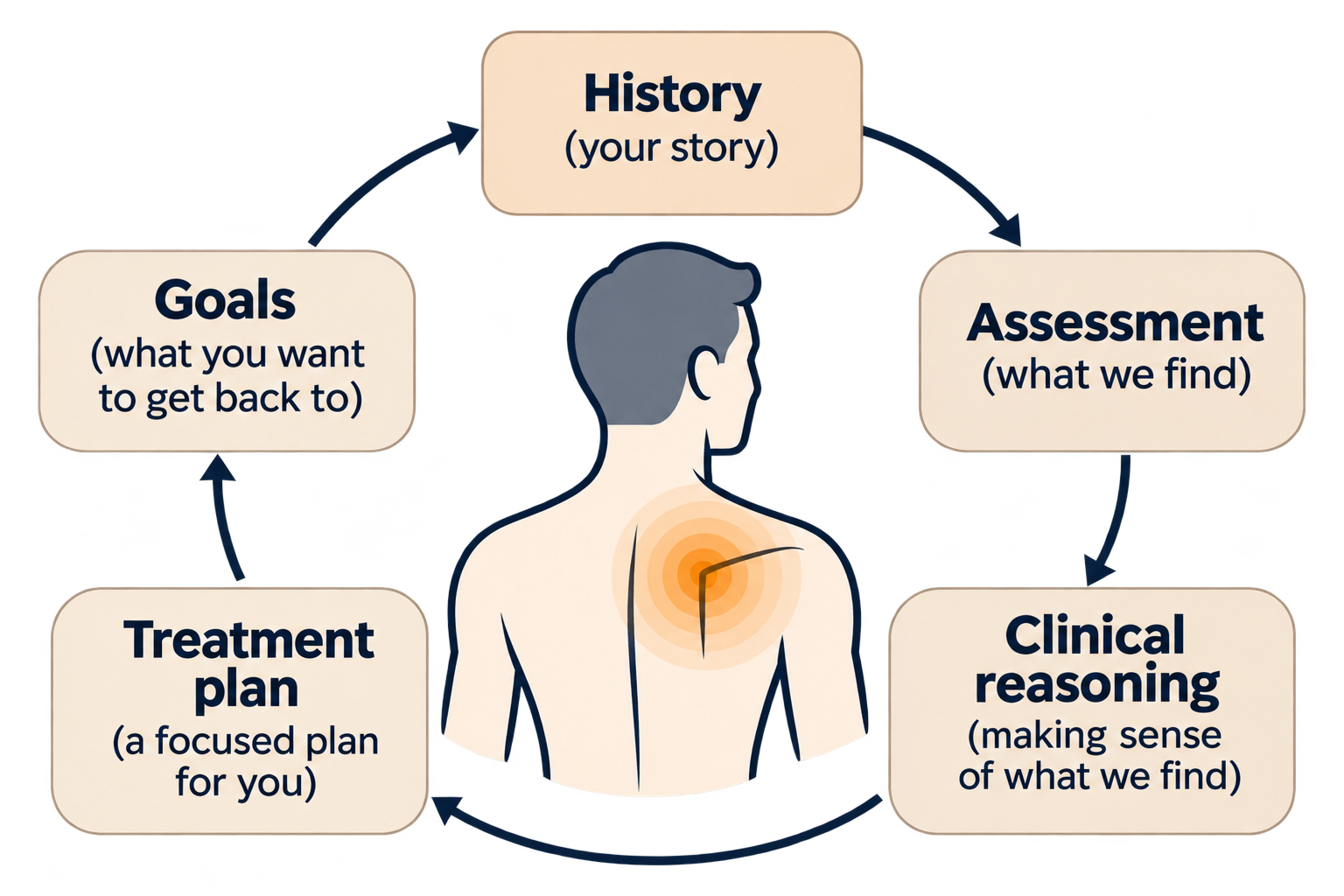
Good clinical reasoning helps us look beyond your symptoms and answer one important question: What needs to change for you to get better?
It combines a thorough understanding of your history, a focused assessment, and careful interpretation of the findings to identify what's actually relevant to your problem.
For example, pain between your shoulder blades doesn't necessarily mean the problem originates there. It could reflect reduced muscle strength or endurance, referred pain from your neck, or a combination of factors. Simply treating where it hurts may miss the bigger picture.
Similarly, not every difference in posture, mobility, or strength is contributing to your symptoms. The key is identifying what matters and what doesn't.
Clinical reasoning is an ongoing process. As we learn more about your condition and how you respond to treatment, we adapt our approach.
Ultimately, this allows us to build a focused rehabilitation plan that addresses your specific needs, goals, and lifestyle. Rather than giving you ten generic exercises, that might mean choosing just two or three that target what matters most.
The goal isn't to do more. It's to do what's most likely to help.
Sometimes, You Won't Know Until You Meet Them
If you're considering Northstar, you're welcome to book an initial assessment or reach out with questions first. I'm happy to explain my approach so you can decide whether it sounds like the right fit.
Unfortunately, some of these qualities are difficult to judge from a website, online reviews, or a list of qualifications.
You might find a physiotherapist with excellent credentials, but discover that their communication style or treatment approach isn't quite right for you. And that's okay.
After your first appointment, consider asking yourself:
Did I feel listened to and understood?
Did my physiotherapist take the time to explain their findings?
Did we discuss my goals and develop a plan together?
Did I feel comfortable asking questions?
Do I feel confident in the direction we're taking?
Have Questions? Let's Chat.
Northstar Physiotherapy is a small, independently owned clinic, and when I say small, I mean it's just me!
One of the benefits of that is you get to communicate directly with your physiotherapist. There's no receptionist or administrative team in between.
I understand that choosing a physiotherapist is a personal decision, and I'm always happy to answer questions before you book an assessment. Whether you're wondering if physiotherapy is right for your condition, curious about my approach, or simply want to see if we'd be a good fit, feel free to reach out.
Send me a question using the form, and I'll personally get back to you. You can choose to receive a response by email or request a phone call, whichever you prefer.
There's no pressure to book. I'm happy to chat and help you decide if Northstar is the right fit for you.